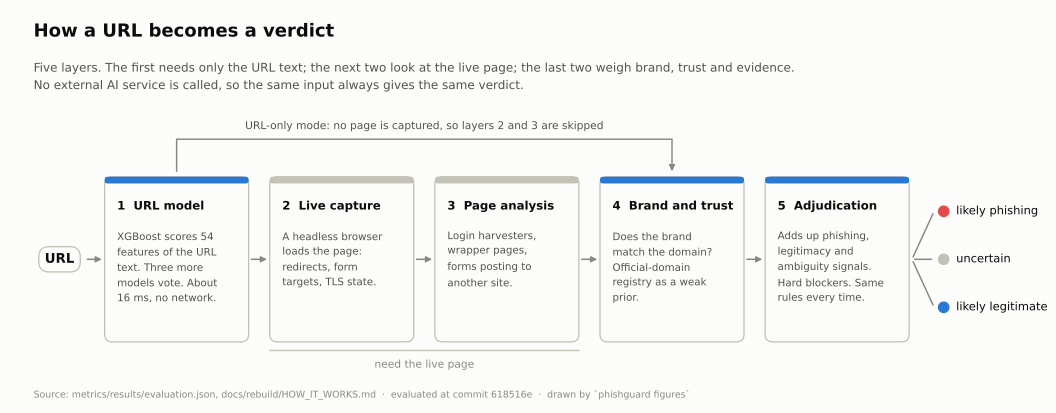
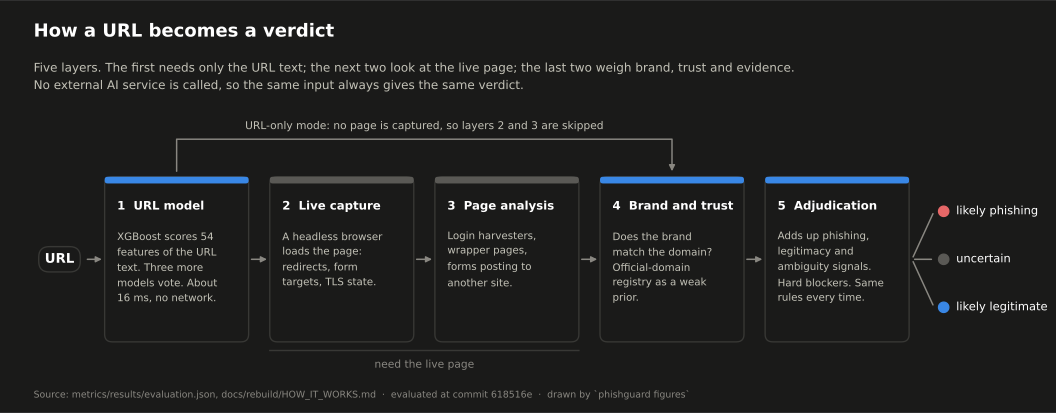
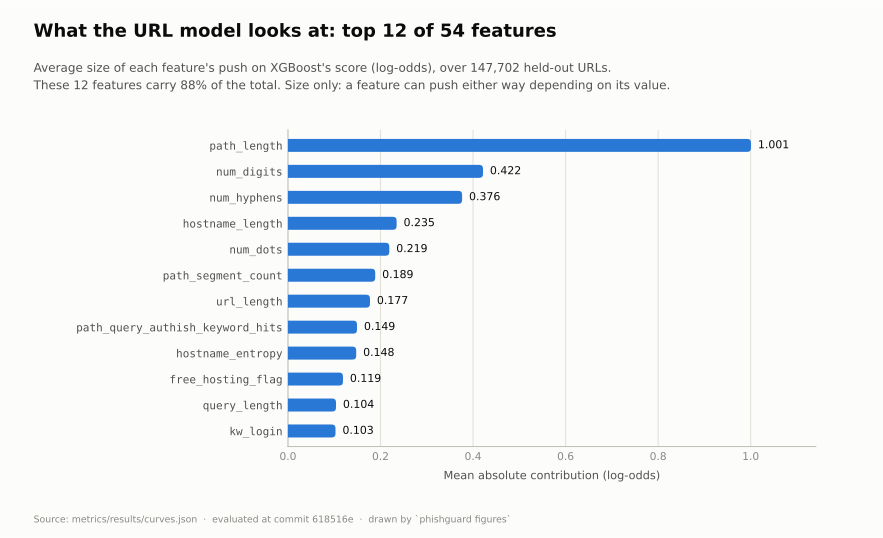
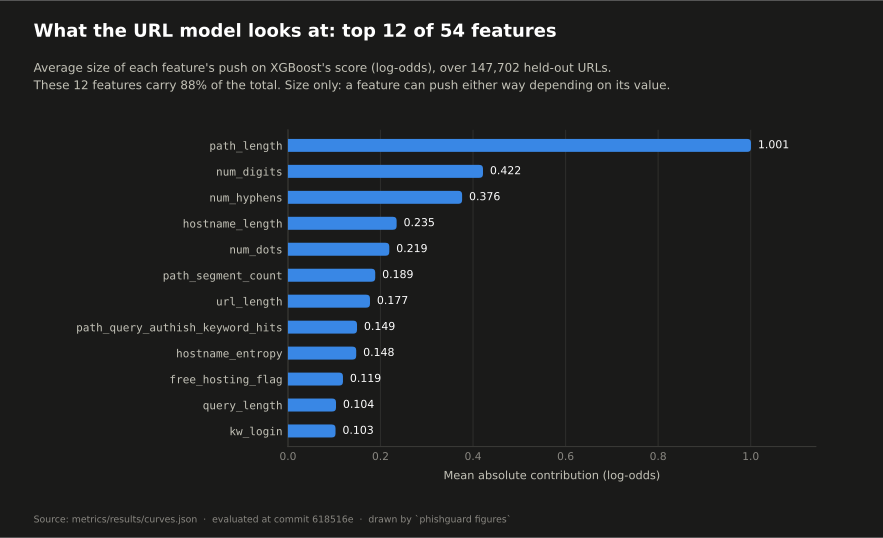
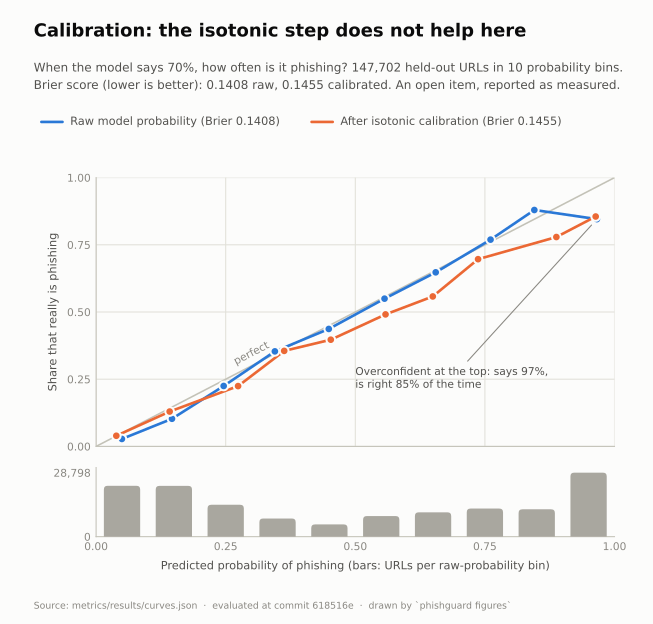
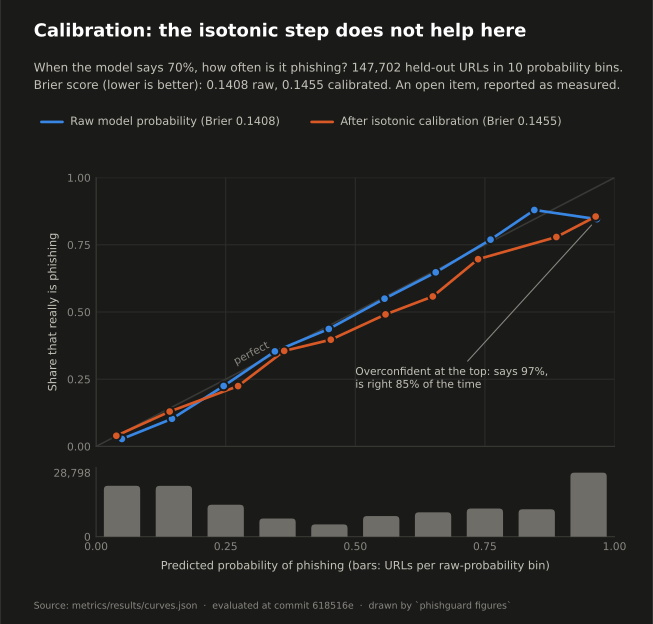
Each page was captured once by GitHub Actions on 2026-09-30 and saved, then replayed through all five layers with the final rules. These cases are from the test half, which was not used to tune the rules. Phishing addresses are shown as plain text and are never links.
CorrectLikely legitimate
Brand site, called legitimate
https://www.wellsfargo.com/about
Page title: About Wells Fargo · Ended on: www.wellsfargo.com · URL model alone: 0.646
scripts from many unrelated third-party domains3+ of 4 models vote legitimatevisit stayed on the same domainpage brand matches the domain
The URL model alone scores this address 0.646, on the phishing side. With the page loaded, the brand on the page matches the domain, the visit stayed on wellsfargo.com, there is no password form, no form posts off-site, and the domain is in the official-domain prior. The only phishing signal is scripts from many unrelated third-party domains, which is weak next to that legitimacy evidence.Truth: legitimate (official brand URL). Explanation written by me from the recorded signals.
All recorded signals (score 0.08 phishing vs 1.29 legitimacy)
- Hard blockers: none
- Phishing signals: scripts from many unrelated third-party domains
- Legitimacy signals: 3+ of 4 models vote legitimate, visit stayed on the same domain, page brand matches the domain, valid HTTPS, domain in the official-domain prior, no password form, no form posts off-site, full site navigation and help links
- Ambiguity signals: URL score 0.50 to 0.70, official content wrapper, brand-coherent wrapper, requests to unrelated third-party domains
CorrectLikely legitimate
Real sign-in page, called legitimate
https://appleid.apple.com
Page title: Apple Account: Sign-in and Manage · Ended on: account.apple.com (another host) · URL model alone: 0.888
URL score 0.85 or highervisit stayed on the same domainfirst-party sign-in flowpage brand matches the domain
A genuine sign-in page is the hardest kind of legitimate page, because a phishing kit copies exactly this. The URL model scores it 0.888. The page evidence wins: the visit stayed inside apple.com, the brand matches the domain, the domain is in the official-domain prior, and no form posts off-site.Truth: legitimate (official brand URL). Explanation written by me from the recorded signals.
All recorded signals (score 0.35 phishing vs 1.4 legitimacy)
- Hard blockers: none
- Phishing signals: URL score 0.85 or higher
- Legitimacy signals: visit stayed on the same domain, first-party sign-in flow, page brand matches the domain, valid HTTPS, domain in the official-domain prior, no password form, no form posts off-site, low HTML risk
- Ambiguity signals: only the boosted models vote phishing, models disagree by more than 0.4, URL model disagrees with a first-party login
False alarmLikely phishing
Brand site, wrongly called phishing
https://www.wellsfargo.com
Page title: Wells Fargo Bank | Financial Services & Online Banking · Ended on: www.wellsfargo.com · URL model alone: 0.888
URL score 0.85 or higher3+ of 4 models vote phishingscripts from many unrelated third-party domainsvisit stayed on the same domainvalid HTTPSno form posts off-site
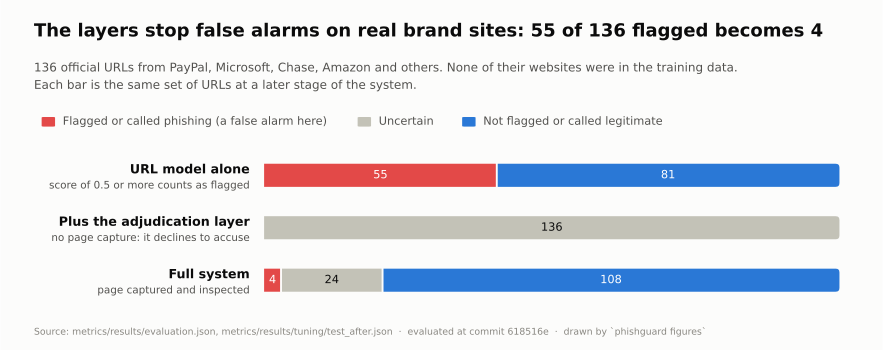
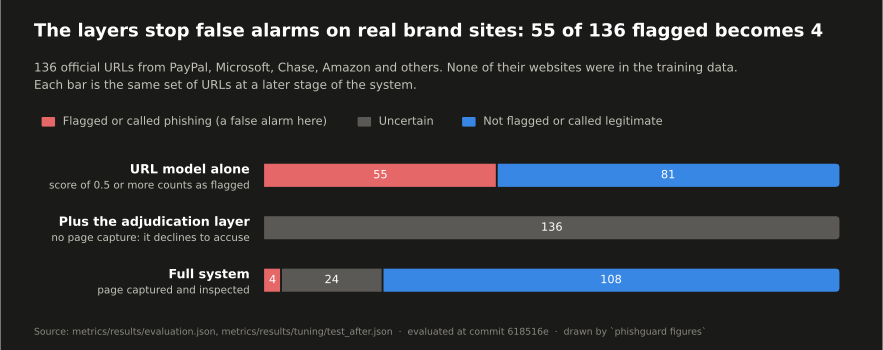
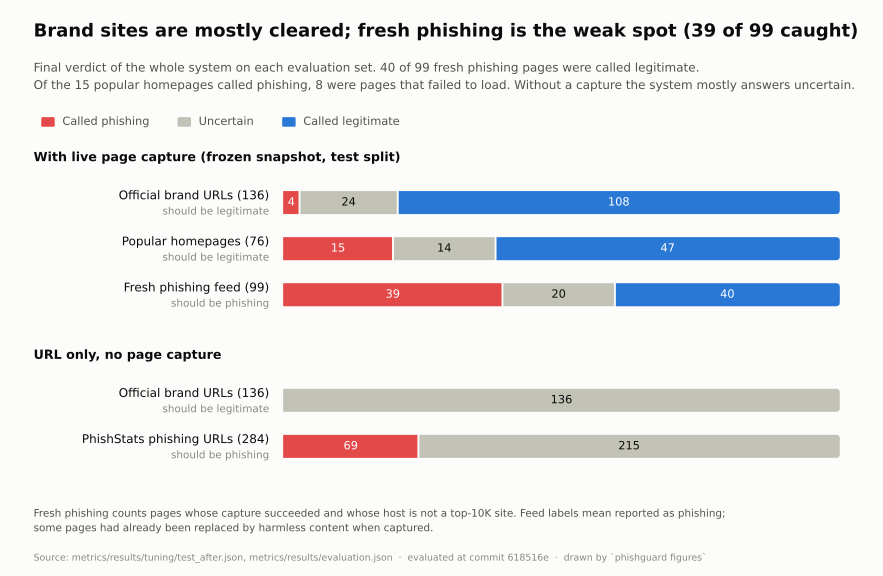
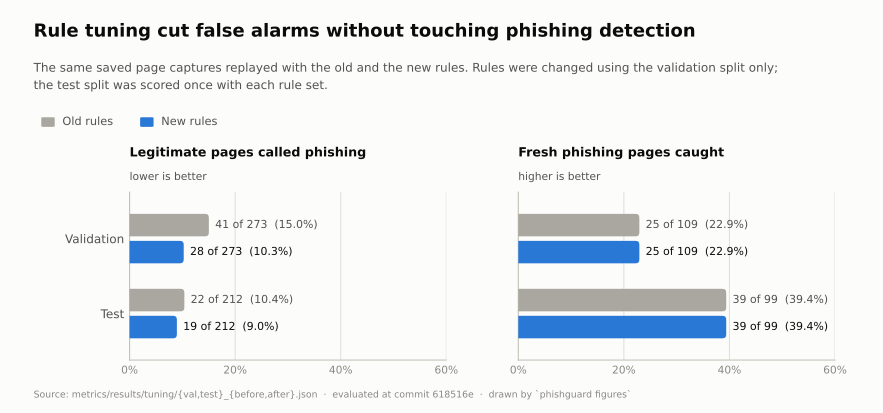
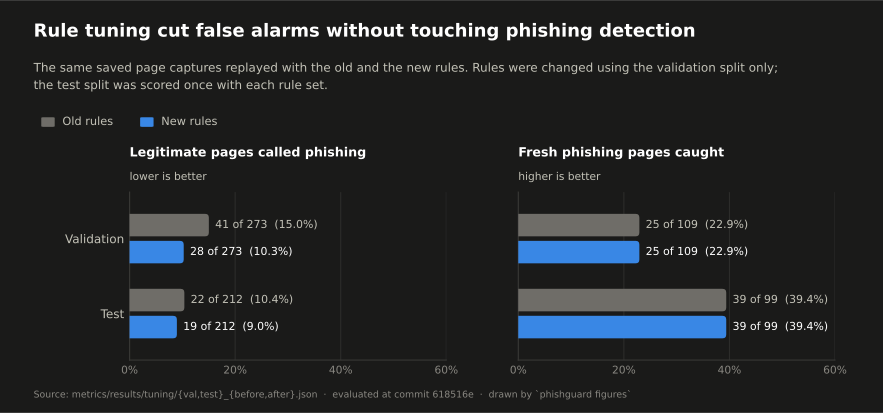
One of the 4 official brand pages (of 136) that the full system flags. The brand check reports a strong brand-to-domain mismatch on this homepage, and the page loads scripts from many unrelated third-party domains. Together with a high URL score, that crosses the phishing threshold. Tuning removed the wrapper hard blocker it had before, but the score alone still gets there. The /about page on the same site (first card) is cleared, so this is a weakness in the rules, not in the domain.Truth: legitimate (official brand URL). Explanation written by me from the recorded signals.
All recorded signals (score 0.85 phishing vs 0.6 legitimacy)
- Hard blockers: none
- Phishing signals: URL score 0.85 or higher, 3+ of 4 models vote phishing, scripts from many unrelated third-party domains, strong brand-to-domain mismatch
- Legitimacy signals: visit stayed on the same domain, valid HTTPS, no form posts off-site, full site navigation and help links
- Ambiguity signals: requests to unrelated third-party domains, URL and page evidence disagree
Fixed by tuningLikely legitimate
Sign-in page fixed by the rule tuning
https://www.dropbox.com/home
Page title: Login or Sign Up for a Dropbox Account · Ended on: www.dropbox.com · URL model alone: 0.338 · Before tuning: Likely phishing
scripts from many unrelated third-party domains3+ of 4 models vote legitimatevisit stayed on the same domainfirst-party sign-in flow
/home sends you to Dropbox's login page. Before tuning, its password form, which is submitted by JavaScript and so has no form action, tripped the credential-harvesting hard blocker, and the page was called phishing. The tuning, done on the validation half only, made the judge treat that as context on a coherent first-party page: same domain, the page names the site, valid HTTPS, nothing posted off-site.Truth: legitimate (official brand URL). Explanation written by me from the recorded signals.
All recorded signals (score 0.08 phishing vs 1.29 legitimacy)
- Hard blockers: none
- Phishing signals: scripts from many unrelated third-party domains
- Legitimacy signals: 3+ of 4 models vote legitimate, visit stayed on the same domain, first-party sign-in flow, valid HTTPS, domain in the official-domain prior, no form posts off-site, content-rich page, low HTML risk
- Ambiguity signals: models disagree by more than 0.4, login submitted by the site's own script, requests to unrelated third-party domains
CaughtLikely phishing
Phishing caught by the page, not the URL
https://listentoyourangels.com/googl/Ed/Ed/index.php
Page title: Google Docs · Ended on: listentoyourangels.com · URL model alone: 0.646
credential-harvesting formstrong brand-to-domain mismatchlogin page on a non-official domainvisit stayed on the same domainvalid HTTPSno form posts off-site
The URL model gives 0.646, which is not enough on its own. The page gives it away: it presents itself as Google Docs on an unrelated domain and shows a login form, which fires the credential-harvesting hard blocker and a strong brand-to-domain mismatch.Truth: phishing (reported to the PhishStats feed). Explanation written by me from the recorded signals.
All recorded signals (score 0.5 phishing vs 0.45 legitimacy)
- Hard blockers: credential-harvesting form
- Phishing signals: strong brand-to-domain mismatch, login page on a non-official domain
- Legitimacy signals: visit stayed on the same domain, valid HTTPS, no form posts off-site
- Ambiguity signals: URL score 0.50 to 0.70, only the boosted models vote phishing, requests to unrelated third-party domains, URL and page evidence disagree
CaughtLikely phishing
Phishing caught by URL and page together
http://49.51.43.12/v3/signin/identifier?amp%3Bfollowup=https%3A%2F%2Faccounts.google.com%2F&%3Bifk...
Page title: Sign in - Google Accounts · Ended on: 49.51.43.12 · URL model alone: 0.999
credential-harvesting formURL score 0.85 or higher3+ of 4 models vote phishingobfuscated script around a loginno form posts off-site
A Google sign-in clone served from a bare IP address over plain HTTP. The URL model is near certain and the host itself is a suspicious pattern. The page adds a credential-harvesting form, obfuscated script around the login, and a sign-in surface without HTTPS.Truth: phishing (reported to the PhishStats feed). Explanation written by me from the recorded signals.
All recorded signals (score 1.6 phishing vs 0.2 legitimacy)
- Hard blockers: credential-harvesting form
- Phishing signals: URL score 0.85 or higher, 3+ of 4 models vote phishing, obfuscated script around a login, sign-in without valid HTTPS, suspicious host pattern, strong brand-to-domain mismatch, login page on a non-official domain
- Legitimacy signals: no form posts off-site
- Ambiguity signals: same domain, but a suspicious one, encoded or tracking-style URL
MissedLikely legitimate
Missed: clean-looking page on a free host
https://mysitee-seven.vercel.app/
Page title: Nu Cashback | Você tem dinheiro te esperando · Ended on: mysitee-seven.vercel.app · URL model alone: 0.985
URL score 0.85 or higher3+ of 4 models vote phishingvisit stayed on the same domainvalid HTTPSno password form
This is the known weakness. The URL model scores it 0.985, but the captured page had no password form, no off-site form and plenty of content, so the legitimacy signals outweighed the URL score. The rules cannot turn 'high URL score plus a clean page' into a phishing verdict without also flagging popular legitimate homepages that the URL model also scores high.Truth: phishing (reported to the PhishStats feed). Explanation written by me from the recorded signals.
All recorded signals (score 0.47 phishing vs 1.1 legitimacy)
- Hard blockers: none
- Phishing signals: URL score 0.85 or higher, 3+ of 4 models vote phishing
- Legitimacy signals: visit stayed on the same domain, valid HTTPS, no password form, no form posts off-site, content-rich page, low HTML risk
- Ambiguity signals: requests to unrelated third-party domains, URL and page evidence disagree
MissedLikely legitimate
Missed: the phishing content was never seen
https://pyvlgy.com/?email=a@a.com&uid=g6fNu6lQWyor4aMW7iRk0u9c
Page title: Just a moment... · Ended on: pyvlgy.com · URL model alone: 0.176
3+ of 4 models vote legitimatevisit stayed on the same domainpage brand matches the domain
The capture got a page titled 'Just a moment...', a bot-check interstitial, not the phishing page. Kits like this most likely show harmless content to data-center browsers, so the page looked clean. The URL, a random domain with a query string, did not look suspicious to the model either (0.176).Truth: phishing (reported to the PhishStats feed). Explanation written by me from the recorded signals.
All recorded signals (score 0.0 phishing vs 1.5 legitimacy)
- Hard blockers: none
- Phishing signals: none
- Legitimacy signals: 3+ of 4 models vote legitimate, visit stayed on the same domain, page brand matches the domain, host identity fits the brand, valid HTTPS, no password form, no form posts off-site, content-rich page, low HTML risk
- Ambiguity signals: models disagree by more than 0.4